


Indonesian petrochemical enterprises have issued force majeure notifications to their respective buyers and suppliers, said Bhima Yudhistira, executive director of the Center of Economic and Law Studies (CELIOS) think tank.
Force majeure is a contractual clause that allows a party to be freed from liability when an event beyond its control prevents performance.
Among firms that have declared force majeure is Jakarta-based company PT Chandra Asri Pacific which operates the country’s largest integrated petrochemical complex, producing olefins and polyolefins, according to its website.
The firm has implemented precautionary measures to safeguard operational resilience across business units and adjust operating levels at its plants, it said in a statement on Mar 2, as reported by Bloomberg.
Meanwhile, Bhima of CELIOS also said that a considerable number of firms in Indonesia, especially those in the garment manufacturing sector, have resorted to workforce reductions or salary freezes to maintain financial solvency.
In Malaysia, businesses are responding by delaying expansion plans, slowing hiring and tightening operational spending and reviewing investment decisions, according to the SME Association of Malaysia.
Agreeing, Syed Hussain of the employers’ federation said that companies considering new production lines or plant expansion are reassessing investment timelines as energy costs fluctuate.
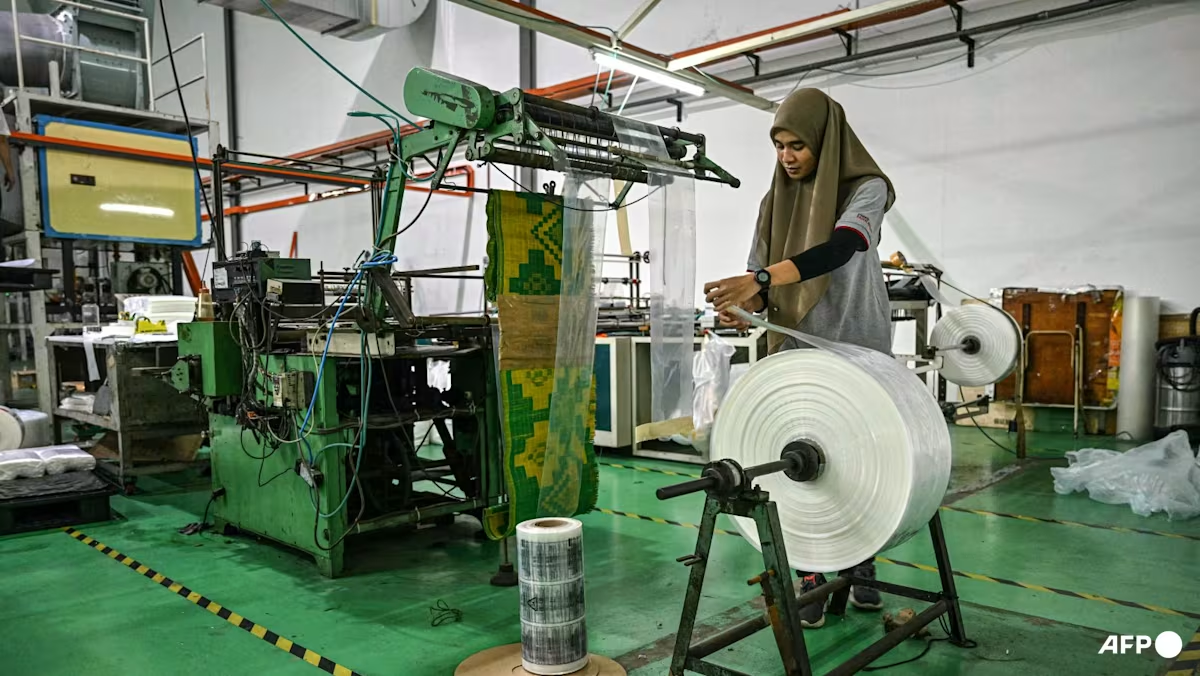
“Energy-intensive manufacturers, particularly in electronics assembly, plastics and metal fabrication rely heavily on electricity for automated production lines and cooling systems,” said Syed Hussain.
“So when energy costs increase or fluctuate, companies often delay expanding production capacity, which in turn delays hiring additional operators, technicians or engineers,” he told CNA.
https://www.channelnewsasia.com/asia/southeast-asia-businesses-iran-oil-prices-logistics-transportation-costs-5996896
