


Shaqib added that data centres should also largely rely on portable water, especially in regions where supply is limited.
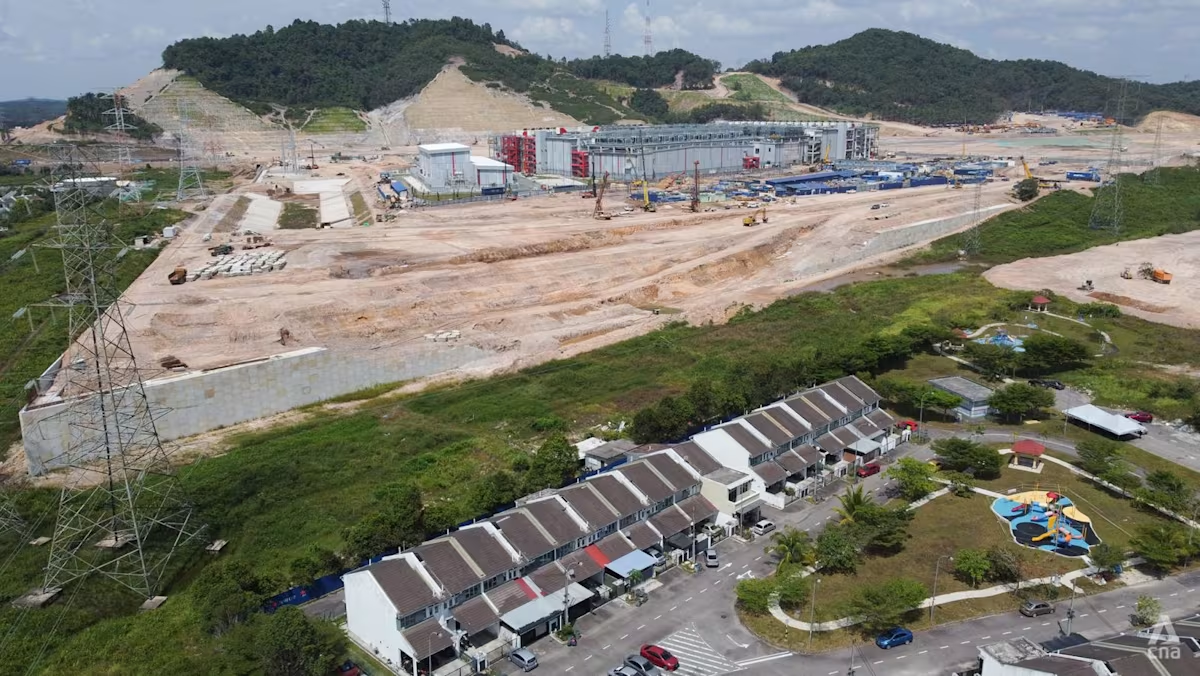
Data centres require large volumes of water for their cooling systems.
Shaqib suggested that Johor state in particular align its data centre projects with improving its water infrastructure systems.
He noted that Johor has seen recent water disruptions in Simpang Renggam and Benut and he noted that the chief minister Onn Hafiz Ghazi has denied that they were linked to data centres, pointing to dry weather instead.
However, he pointed out that these incidents sharpen the argument that the southern state has structural issues in water management.
Shaqib told CNA: “If Johor is already vulnerable to drought-linked stress and source-level constraints, then the appropriate policy response is not to dismiss future industrial demand but to ensure that resource allocation frameworks are strengthened before the system is pushed further.”
But others say overall the policy to pivot to only-AI data centres means that Malaysia is prioritising quality over quantity.
“This prevents companies from building massive shells under the guise of AI and then filling them with low-tech, low-value generic cloud storage that doesn’t contribute to the local tech ecosystem (via jobs),” said Tan.
“By freezing the ‘non-AI’ projects, the government is effectively clearing the queue to ensure that the most advanced projects (like those from Microsoft, Google, or YTL-Nvidia) have the power and water they need without delay,” he added.
Shaqib echoed similar sentiments, outlining how the policy is an example of capital screening and signals that Malaysia only wants projects that would benefit the country in the long term.
“What the federal government is now making explicit is that Malaysia no longer wants to intermediate digital infrastructure merely on the basis of cheaper land, power and water,” he said.
“The state is trying to discriminate between facilities that deepen Malaysia’s position in the digital value chain and those that mainly arbitrage utility costs. That is a qualitatively different industrial-policy posture,” the analyst added.
https://www.channelnewsasia.com/asia/malaysias-curb-non-ai-data-centres-seen-strategic-throttle-challenges-remain-5988916
