


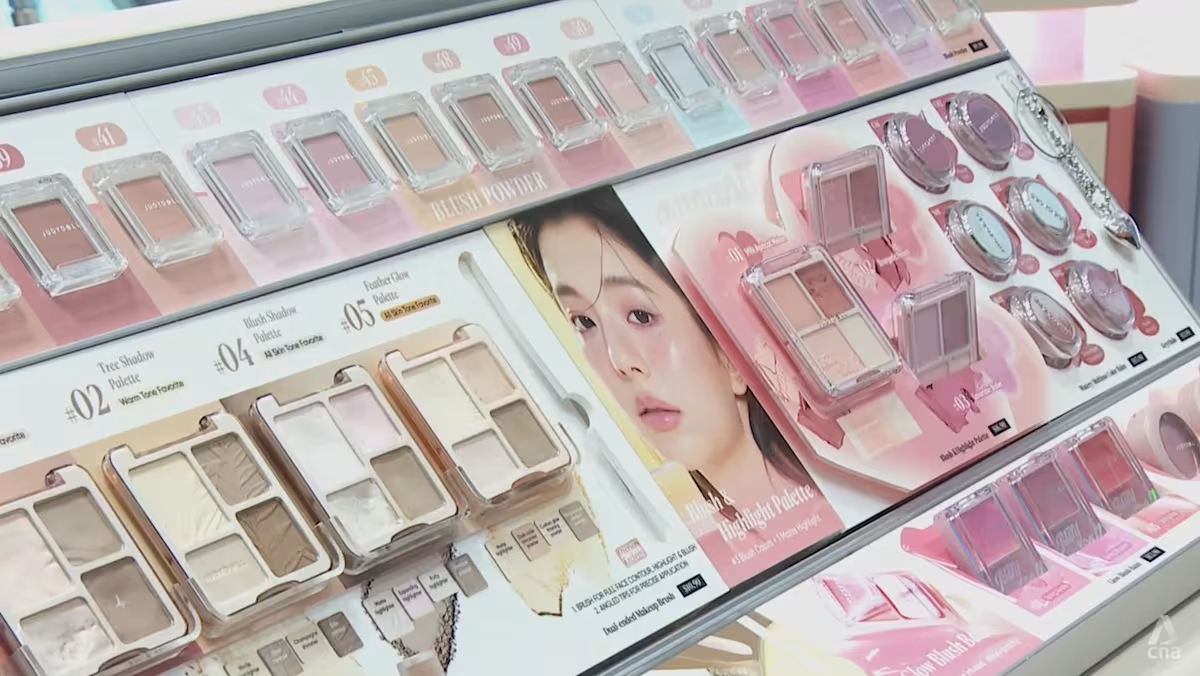
Watsons Singapore’s commercial director Goh Choon Gek said that K-beauty brands are still its mainstay and Western brands perform strongly among premium skincare lines, but C-beauty stands out due to its novelty.
“It’s very active on social media and we also feel that there’s actually a lack of physical presence, so we think there’s a lot of potential there, and we provide in store trials and testers and beauty advisors,” she added.
“We think the key barriers (are) trust and familiarity, especially when the brands are new in the market.”
TRENDS, TRUST AND TARIFFS
Advisory firm Dezan Shira & Associates estimates the global C-beauty market could grow from about US$18.7 billion last year to over US$49 billion by 2035.
But industry watchers say winning consumer trust will be key to long-term success – and tariff uncertainty could also play a part.
Last week, US President Donald Trump signed an order for a 10 per cent tariff on US imports to last 150 days, after the Supreme Court struck down his “Liberation Day” tariff policies. The Trump administration is working to increase it to 15 per cent, said a White House official.
Trivium China’s Zhang noted that the 10 per cent tariff is “good news” for China, but several caveats remain.
For example, tariffs on steel and aluminium, as well as duties linked to trade disputes with China, remain in effect. These target a “huge swathe” of Chinese goods, Zhang told CNA’s East Asia Tonight.
“In addition, you also have a long list of anti-dumping and countervailing duties. The US Commerce Department recently finalised its 205 per cent tariffs on some Chinese materials using lithium-ion batteries,” he added.
“The key point (is) none of those other tariffs were affected by the Supreme Court ruling, meaning Chinese industrial goods still face high duties on average.”
https://www.channelnewsasia.com/east-asia/china-beauty-industry-c-beauty-cosmetics-skincare-5957726
