



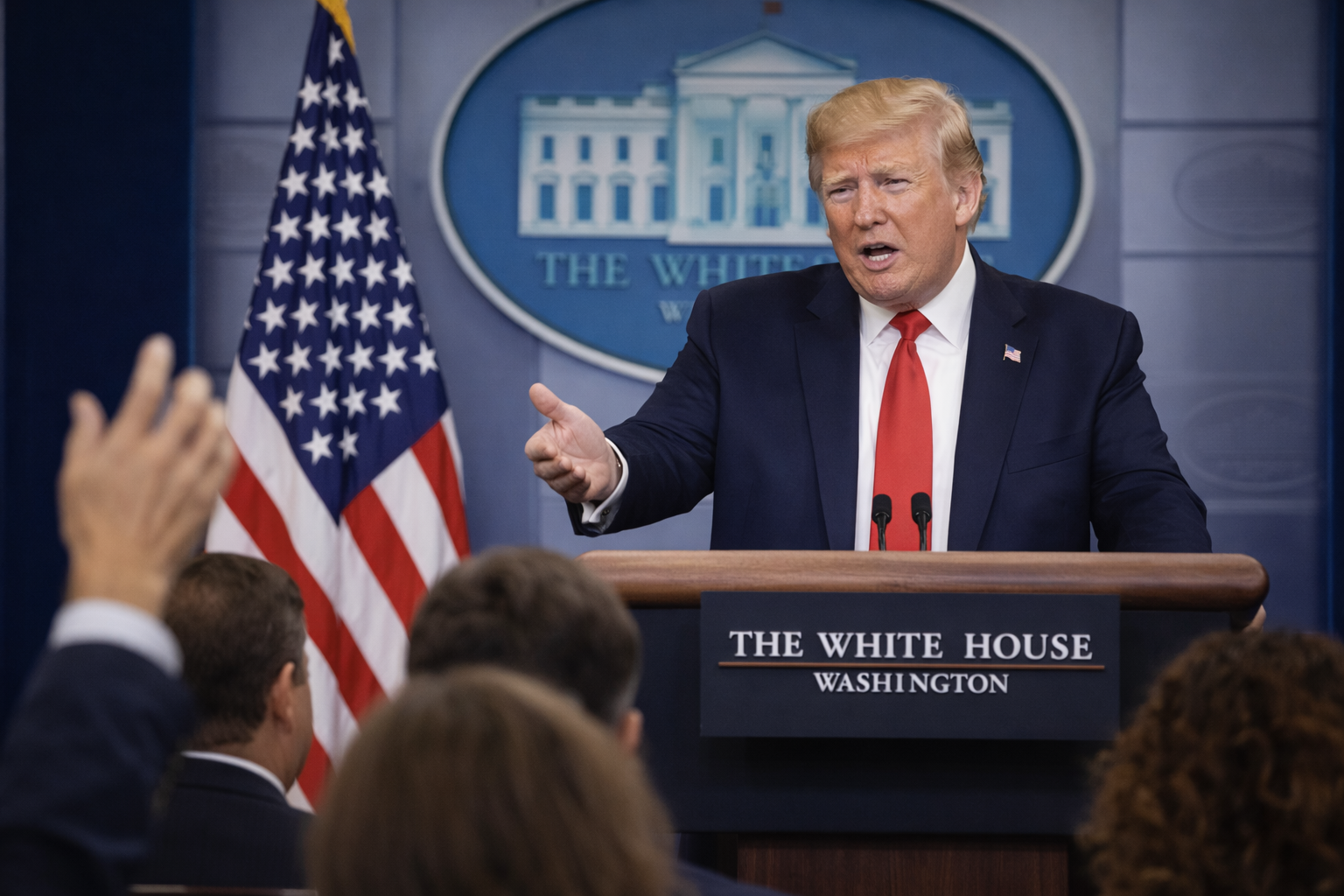
President Donald Trump moved within hours of the Supreme Court ruling that gutted his earlier tariff program, unveiling a new 10% “global tariff” that would sit on top of existing US import levies.
He framed the move as both an economic shield and a political counterpunch, using a White House briefing room address to argue that tariffs have been central to his agenda and to blast the justices who ruled against him.
The big question for investors: Is this a reset, or just the next round?
A new tariff, a new legal lane
Trump’s new peg is a 10% across-the-board tariff, and the key detail is the legal hook: Section 122 of the Trade Act of 1974, a rarely used tool that allows a president to impose a temporary import surcharge or quotas in specific circumstances.
The guardrails matter. Section 122 generally caps the action at up to 15% and limits it to 150 days, with any extension beyond that requiring Congress to step in.
That structure helps explain the White House’s messaging on “alternatives.”
The Supreme Court’s decision curtailed Trump’s use of a 1977 emergency statute (IEEPA) as the basis for sweeping tariffs, forcing the administration to shop for other authorities that can move fast.
Section 122 is fast, but it’s also time-limited by design, and it was originally tied to “international payments” stress (think balance-of-payments trouble or dollar instability), which could invite another round of legal challenges if used broadly as a general trade weapon.
Multiple analyses note that Section 122 has effectively sat on the shelf for decades and has never been invoked in the modern era, which raises execution risk and uncertainty for importers trying to price what happens after the clock runs out.
Why markets may still pivot to tech
At first glance, a new global tariff sounds like the opposite of relief. But markets trade on pathways as much as on policy.
The Supreme Court ruling signaled that the president cannot keep building a permanent tariff wall using emergency powers, and that matters for valuation, because it reduces the odds of sudden, open-ended cost shocks.
Now layer in how tech actually works.
Even “American” tech products rely on global supply chains: chips, memory, networking gear, servers, and components cross borders repeatedly before they become a phone, a GPU server, or a data-center rack.
A broad tariff acts like a tax on that entire chain, which can pressure margins or push companies to raise prices.
That’s why tech stocks can rise on the court decision even as Trump threatens a new tariff: investors may be betting the next tariff regime will be more temporary, more contested, and harder to sustain without Congress.
https://invezz.com/news/2026/02/20/trump-hits-back-with-new-10-global-tariff-after-supreme-court-setback/
