


Europe markets and policymakers are weighing softer economic signals against lingering geopolitical risks.
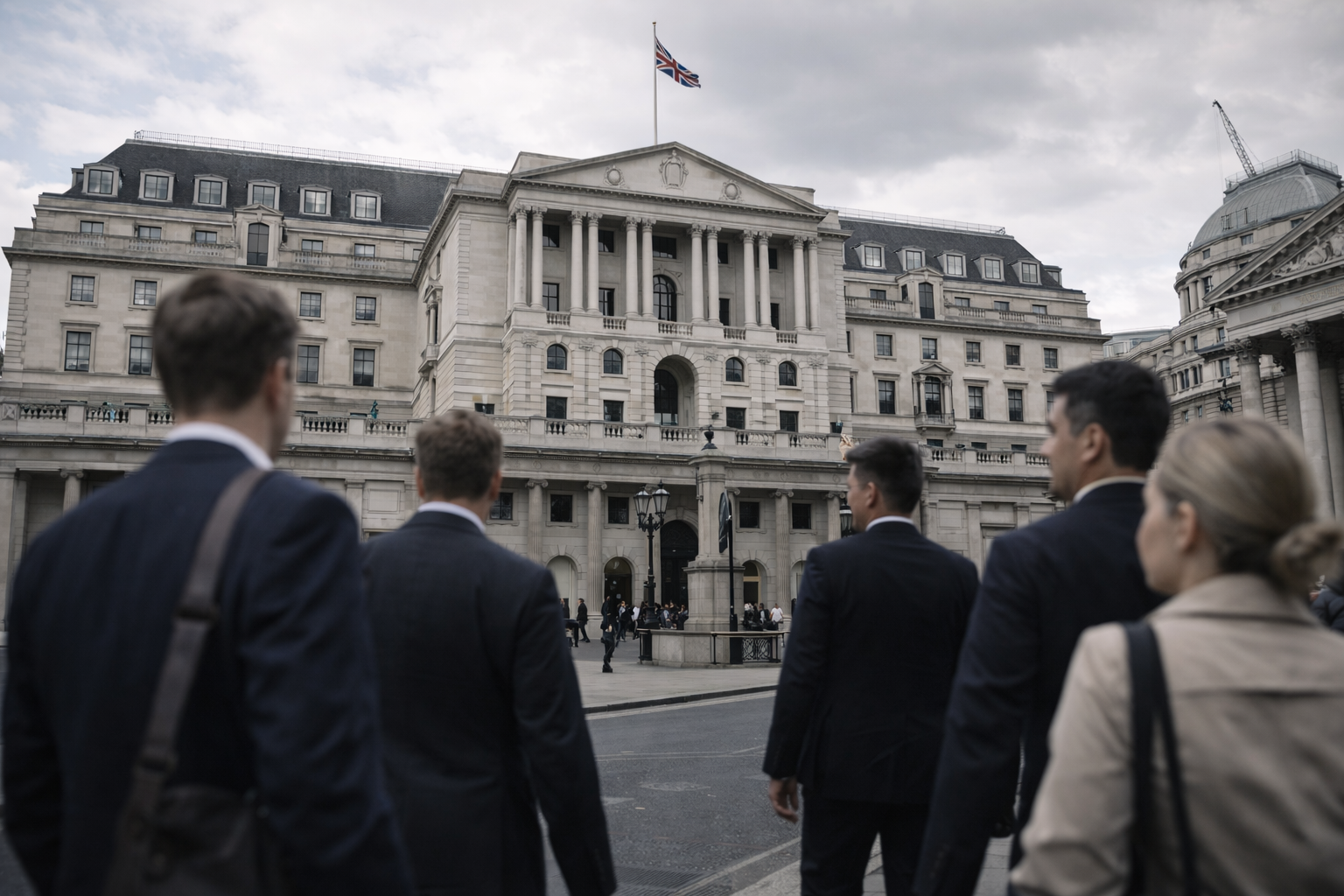
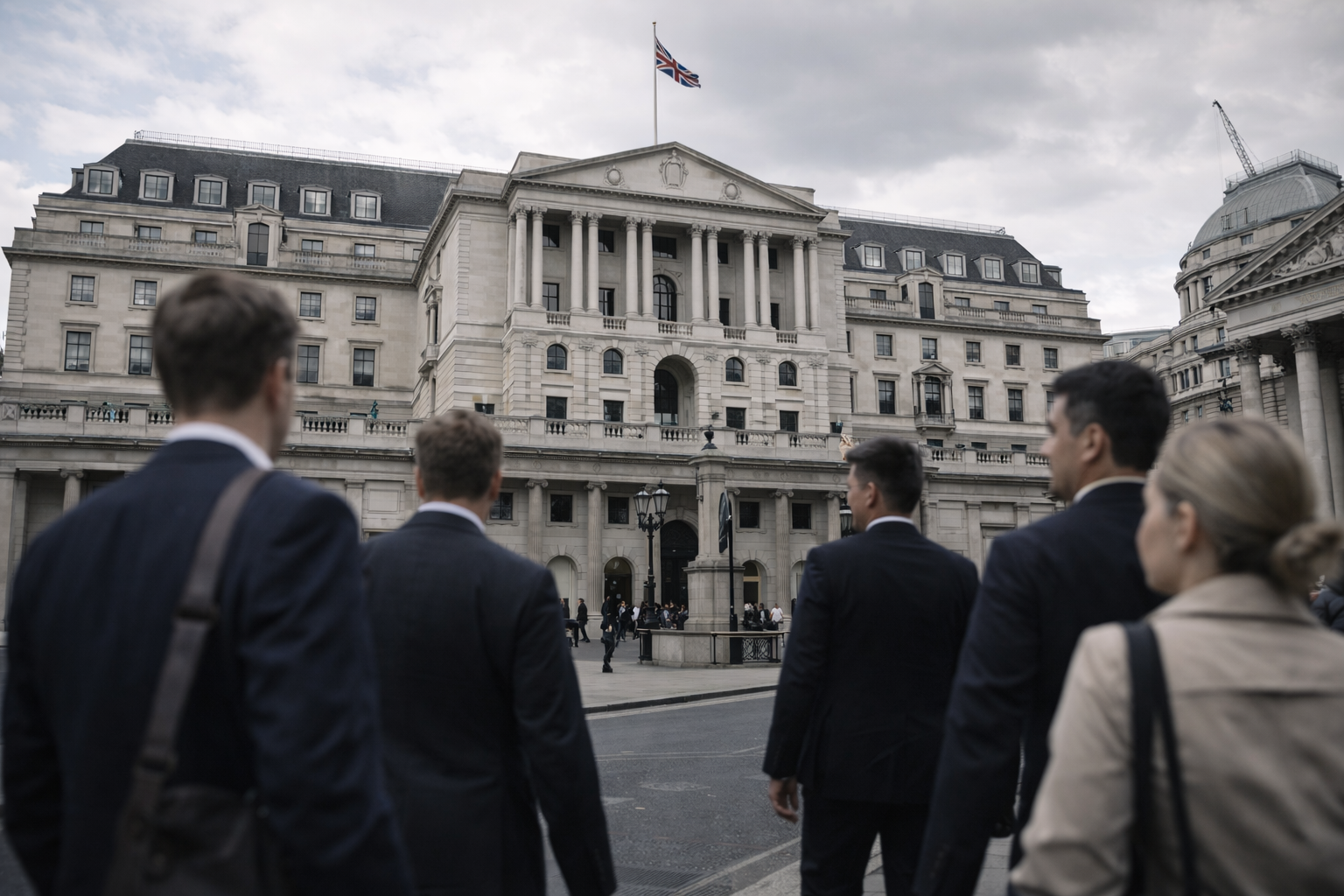
UK data showing cooling pay growth has reinforced expectations of Bank of England rate cuts, lifting the FTSE even as sterling slipped.
Germany’s outlook remains fragile despite a modest growth upgrade, underscoring weak confidence across Europe.
Meanwhile, Russia and Ukraine have entered another round of US-mediated talks in Geneva, with expectations subdued ahead of the invasion anniversary.
UK pay growth cools
UK pay growth cooled at the end of 2025, adding to expectations that the Bank of England will keep edging toward rate cuts.
The Office for National Statistics said regular average weekly earnings rose 4.2% year-on-year in the three months to December, down from 4.4% in the prior three‑month period.
Private-sector regular pay growth also eased to 3.4%.
With inflation still above target but the labour market softening, investors are now close to pricing two quarter-point BoE cuts by year-end.
Weak fourth-quarter GDP data has reinforced the shift in focus from inflation to growth, and nudged sterling lower on Tuesday.
FTSE rises on rate-cut hopes
London’s FTSE 100 edged higher on Tuesday, helped by softer UK labour-market signals that boosted hopes of a Bank of England rate cut as soon as March.
The blue-chip index rose 0.2%, while the FTSE 250 slipped 0.1%.
Data showed the jobless rate climbing to 5.2% and wage growth cooling, nudging sterling about 0.2% lower and lifting bank shares.
Miners dragged after metal prices softened, with Antofagasta sliding despite a 52% jump in annual core profit.
Defence names also fell as geopolitical tensions appeared to ease, while tech stocks rebounded, led by RELX and Experian.
January inflation figures are due Wednesday.
Germany’s growth stalls
Germany’s economy is crawling, with the DIHK expecting just 1% growth in 2026, a small upgrade from its earlier 0.7% call.
The chamber said a year of reforms is needed to turn that into a lasting recovery.
Firms in its survey blamed weak domestic demand, rising labour costs, policy uncertainty and high energy and raw-material prices for keeping confidence depressed.
The DIHK business climate index ticked up to 95.9, but stayed far below its long-run average of 110.
Investment plans remained cautious: 23% of companies aim to spend more, while 31% expect to cut back.
Russia-Ukraine begin new round of talks
Representatives from Russia and Ukraine meet in Geneva on Feb. 17-18 for a new round of US-mediated peace talks, with territory set to dominate the agenda.
Russia says Kyiv must hand over the remaining parts of Donetsk it does not control, a demand Ukraine rejects.
The talks follow two earlier rounds in Abu Dhabi that both sides described as constructive but produced no breakthrough.
Moscow says it wants to cover a broader set of issues, including other demands beyond land.
Expectations are low as the meetings come ahead of the Feb. 24 anniversary of Russia’s full-scale invasion, four years on.
https://invezz.com/news/2026/02/17/europe-bulletin-markets-weigh-rate-cuts-german-economy-stalls/
