


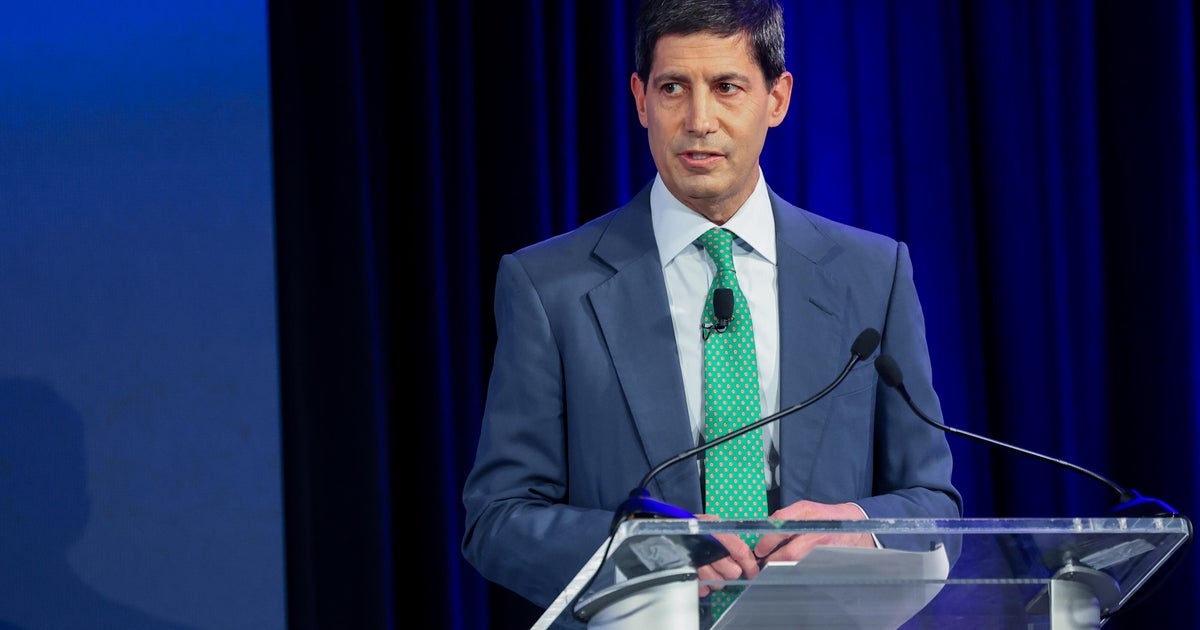
President Trump’s move to nominate Kevin Warsh to replace Jerome Powell as Federal Reserve chair is likely to be viewed as a safe choice on Wall Street, elevating a former Fed official with deep monetary policy experience and well-established views on inflation.
Powell, who has led the Fed since February 2018 after being nominated for the top role by Mr. Trump during his first term as president, is set to step down in May 2026. In his second term, however, Mr. Trump has grown increasingly critical of Powell, regularly disparaging the Fed chief and pressing him to lower interest rates.
Warsh, 55, served as a Federal Reserve governor — one of seven officials who guide the central bank’s policy decisions — from 2006 through 2011, a period that includes the deep recession that followed the 2008 financial crisis.
In recent years, Warsh has grown increasingly critical of the Fed, arguing that the institution has become excessively focused on backward-looking economic data rather than anticipating changes, Deutsche Bank analysts said in a December 15 report. Still, Warsh has held hawkish views, meaning that he has emphasized the importance of fighting inflation, leaning toward keeping interest rates higher rather than cutting, experts note.
Trump’s nomination of Warsh is “one of the better outcomes for investors compared to the other contenders that had been in the running,” said Stephen Brown, deputy chief North America economist at Capital Economics, in a note to investors.
“Warsh’s long-running hawkish views should help to counteract concerns that he might morph into a full-blown Trump stooge,” he added.
In a November Wall Street Journal opinion piece, Warsh said the Fed’s “bloated balance sheet” has contributed to the economic malaise affecting many Americans, allowing borrowing to be “too easy” for Wall Street while “credit on Main Street is too tight.”
Tierney L. Cross / Bloomberg via Getty Images / Tierney L CROSS 
Aligned with Trump on interest rates
The Federal Reserve raises and lowers its benchmark interest rate as necessary to control inflation and support job growth — a mission central bank officials have long said requires insulating the Fed from political pressure.
Warsh has recently argued for lower interest rates, a view that aligns with Mr. Trump’s push for the Fed to ease borrowing costs.
“On policy decisions, Warsh’s recent comments suggest he could support lower policy rates, possibly counterbalanced by a smaller balance sheet,” the Deutsche Bank analysts said.
The Fed held rates steady at its Jan. 28 meeting, marking the central bank’s first pause after three consecutive cuts. Powell cited the U.S. economy’s strong growth and a stabilization in the labor market as reasons that the majority of the 12-person Federal Open Market Committee voted to keep its benchmark rate unchanged at between 3.5% and 3.75.%.
Mr. Trump criticized the decision on Thursday, writing on social media, “The Fed should substantially lower interest rates, NOW!”
To be sure, Warsh’s view wouldn’t necessarily dictate Fed policy, given that the Fed chair doesn’t set interest rates unilaterally. Rather, decisions on the federal funds rate, which affects borrowing costs for consumers and businesses, are set by a majority vote among the 12 members of the Federal Open Market Committee (FOMC).
FOMC members are also likely to signal to Wall Street that the central bank remains insulated from political pressure after a change in Fed leadership, reducing the odds of a sharp shift in monetary policy, Deutsche Bank said.
In the orbit of billionaires
Warsh, a graduate of Stanford University and Harvard Law School, went to work on Wall Street at Morgan Stanley after getting his law degree. He worked in mergers and acquisitions at the investment bank.
In 2002, Warsh joined President George W. Bush’s administration, where he worked in the National Economic Council. The president tapped him to serve on the Fed board of governors in 2006, making Warsh the youngest person ever to hold the position.
Since leaving the Fed in 2011, Warsh has worked for think tanks such as the conservative-leaning Hoover Institution and has also taught at Stanford Business School.
More recently, Warsh has worked with billionaire investor Stanley Druckenmiller, whose estimated $11 billion net worth stems from his work at hedge funds such as George Soros’ Quantum Fund.
In 2011, Druckenmiller appointed Warsh to serve as a partner at the investor’s Duquesne Family Office, where Warsh told Barron’s that he oversees the billionaire’s “small nest egg.”
Warsh is also married to a billionaire: cosmetics heiress Jane Lauder, whose net worth is estimated at $2.5 billion by Forbes.
In a July interview with CNBC, Warsh expressed optimism about the Trump administration’s economic policies, as well as the potential for artificial intelligence to boost business productivity.
“AI is going to make everything cost less, and the U.S. could be the big winner,” he said. “If I were the president, what I would be worried about is a central bank that doesn’t see any of that — a central bank that is stuck with models from 1978.”
https://www.cbsnews.com/news/kevin-warsh-economy-federal-reserve-chair/
