


The administration of President Donald Trump has announced the United States’ latest boat strike in international waters, which killed two people in the eastern Pacific Ocean.
Friday’s attack brings the total number of bombings to at least 36 since Trump began his campaign on September 2. An estimated 125 people have been killed in the Caribbean Sea and eastern Pacific, including the two latest casualties.
Recommended Stories
list of 3 itemsend of list
US Southern Command, the military unit that oversees operations in Central America, South America and the Caribbean Sea, reported that one survivor had yet to be recovered. It added that the US Coast Guard had been notified to activate its search-and-rescue operations.
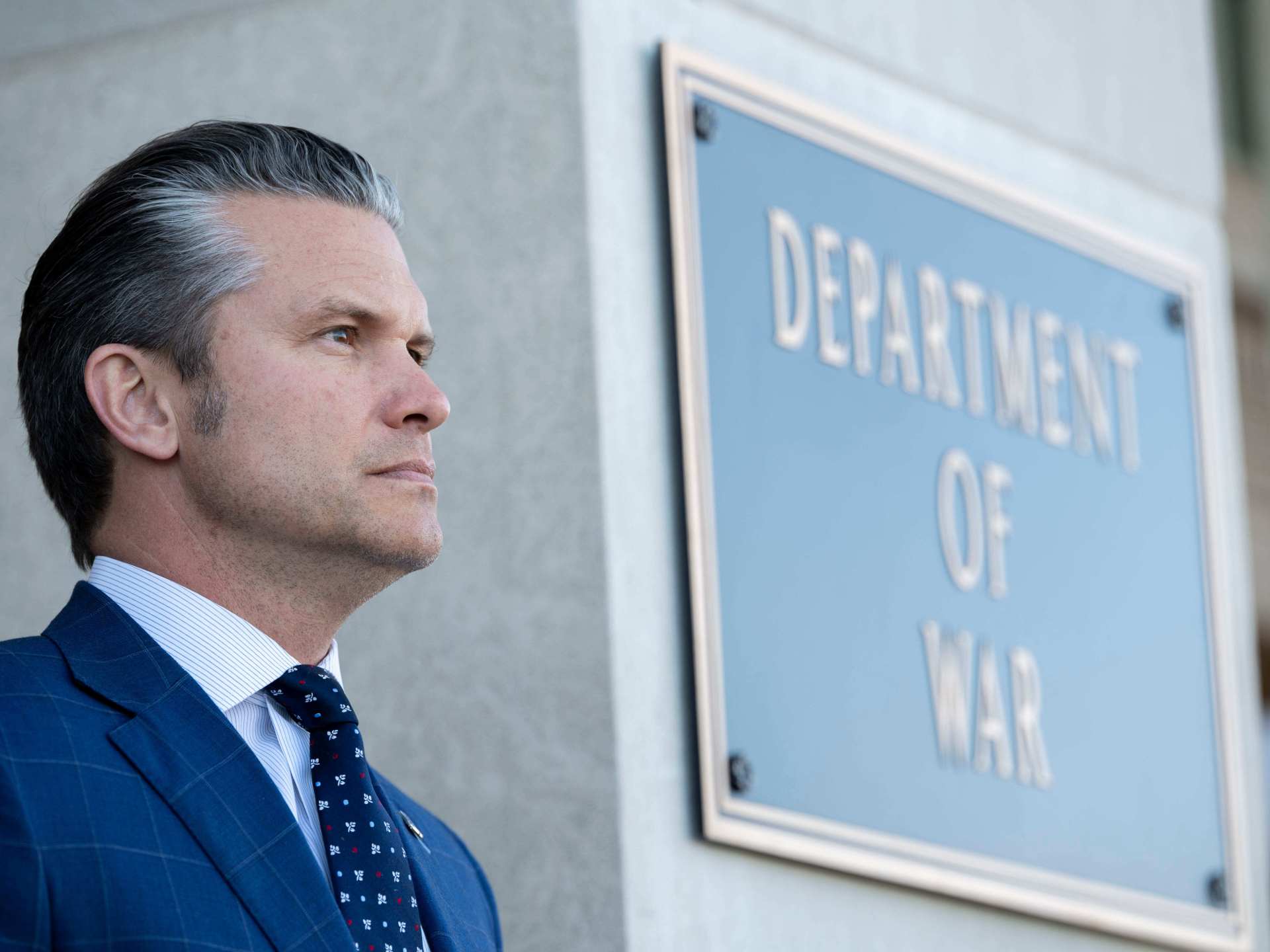
“On Jan. 23, at the direction of [Secretary of Defense] Pete Hegseth, Joint Task Force Southern Spear conducted a lethal kinetic strike on a vessel operated by Designated Terrorist Organizations,” the command wrote in a social media post.
“Intelligence confirmed the vessel was transiting along known narco-trafficking routes in the Eastern Pacific and was engaged in narco-trafficking operations.”
The deadly strike is the first such attack to take place in 2026: The last one took place on December 31.
And it is also the first to unfold since the US launched a full-scale military operation on January 3 in Venezuela to remove the country’s then-president, Nicolas Maduro, and his wife Cilia Flores. The couple is now being held in a federal jail in Brooklyn, New York, on charges of narcotics trafficking.
Trump’s increasingly aggressive actions in the Latin American region have sparked alarm among world leaders and human rights advocates, who have compared the boat bombings to extrajudicial killings.
Unknown fate for survivors
The treatment of survivors during such strikes has also elicited alarm.
One survivor from an October 27 attack went missing in the waves and is presumed dead. And during a December 30 attack, Southern Command reported that eight survivors “abandoned their vessels” and jumped overboard before their boats could be sunk in a second strike.
Despite efforts by the US Coast Guard, the men were never found.
One of the biggest controversies came in late November, when The Washington Post revealed that the very first strike in the series, on September 2, resulted in two previously unknown survivors.
Those survivors were then killed in a follow-up “double-tap” strike as they clung to the wreckage of their boat.
Lawmakers on both sides of the political aisle denounced the “double tap” as a possible crime, and pressure has mounted for the Trump administration to release video to the public depicting the second strike.
Only on one rare occasion have survivors been recovered from the Trump administration’s lethal boat strikes.
On October 16, the US military targeted a submersible vessel for bombing. Two men survived, one from Ecuador and one from Colombia, and they were repatriated to their home countries. Both men were reportedly released from custody without charges, as officials cited a lack of evidence to detain them.
Questionable legal justification
The Trump administration has repeatedly accused the people on board the boats of being drug traffickers, though it has never offered any evidence to justify that claim.
In October, media reports emerged that the White House had issued a notice to Congress saying that the president had determined that the US was locked in an “armed conflict” with drug traffickers, whom it described as “unlawful combatants”.
Drug trafficking is a crime under international law, but not an act of armed aggression.
Without a forum in which to weigh evidence and ascertain guilt, experts at the United Nations and elsewhere have warned the killings could amount to international crimes.
“These attacks appear to be unlawful killings carried out by order of a Government, without judicial or legal process allowing due process of law,” a group of UN experts said in a statement in November.
They added that the bombing campaign violates “fundamental international human rights law prohibiting arbitrary deprivation of life”, since the attacks were not carried out “within the context of national self-defence” nor against “individuals posing an imminent threat”.
US groups, including the American Civil Liberties Union and the Center for Constitutional Rights, have sued the Trump administration to release a secret opinion from the Justice Department’s Office of Legal Counsel that it uses to justify the attacks. But that legal case remains ongoing.
The US also faces questions about the manner in which it conducts the strikes, after a report in The New York Times this month claimed it had disguised the aircraft in the September 2 attack as a civilian plane.
That could explain why survivors appeared to wave at it for help before being killed in the “double tap”, according to the report. Under international law, such deception can be considered “perfidy”, a serious war crime.
No victims have ever been publicly identified by the US, raising additional concerns.
Families from countries including Colombia and Trinidad and Tobago have claimed that their loved ones were among those killed, and many insist the deceased were merely fishermen, not drug traffickers.
In December, the family of missing fisherman Alejandro Carranza was the first to file an international complaint against the US for its boat strikes.
It appealed to the Inter-American Commission on Human Rights to stop the bombings, investigate the circumstances and seek compensation on the family’s behalf.
https://www.aljazeera.com/news/2026/1/23/one-survivor-reported-two-killed-in-us-boat-strike-in-the-eastern-pacific?traffic_source=rss
