


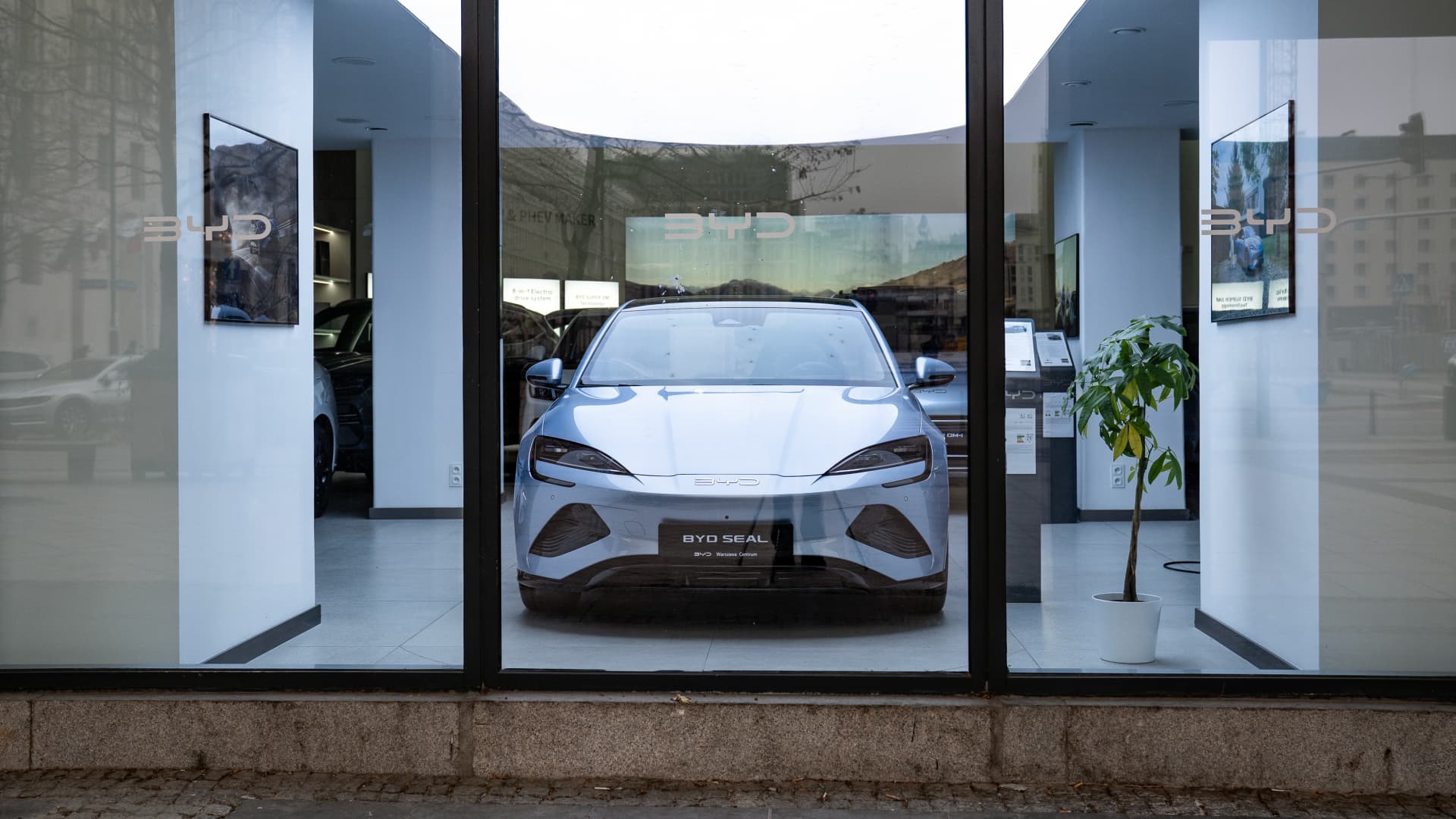
The poster child for China’s electric car boom is also an underappreciated leader in batteries. That’s the latest call from Bernstein, whose analysts this week reiterated an outperform rating on Hong Kong-traded shares of Chinese automaker BYD . BYD is the second-largest battery manufacturer in the world measured by electric vehicle installations — shipping 70% more batteries than the third-largest player, the Bernstein analysts said. “Amid current pressures in the Chinese EV market, BYD’s valuation appears compressed and overlooks the value and growth potential embedded in BYD’s battery assets,” the report said. “Our analysis indicates the battery segment alone is worth nearly as much as the entire company’s market valuation.” Cellphone battery start BYD got its start back in the 1990s as a maker of cellphone batteries. After transitioning into automobiles, the company’s safety-focused “Blade” battery — launched in BYD’s sporty Han vehicle in 2020 — helped make the automaker a leader in EV sales, finally beating Tesla last year . In September, BYD revealed a utility-grade energy storage system based on the Blade battery. The new system, called “Haohan,” costs less to manufacture than other solutions, the Bernstein analysts pointed out. BYD’s battery shipments to energy storage systems more than doubled last year, while those to vehicle makers such as Xiaomi , Xpeng and Toyota nearly tripled, the report said. Slightly more than half of BYD’s battery shipments went into the company’s own cars, helping the automaker save costs, Bernstein added. Xiaomi and XPeng each accounted for 25% of BYD’s external EV battery shipments, the analysts said. In all, BYD’s total battery shipments grew by 47% last year, and are expected to rise by 35% this year. Ford sales On Thursday, the Wall Street Journal said Ford Motor is in talks to buy BYD batteries for some hybrid vehicles, citing unnamed sources familiar with the matter. BYD had no comment. “We talk to lots of companies about many things. We don’t comment on rumors and speculation about our business,” a Ford spokesperson said. In the past decade, BYD has risen so much that today Ford’s market value of $55 billion is less than half of BYD’s, at around $115 billion. More recently, though, the Chinese company’s shares have tumbled over the past several months amid fierce domestic competition and slowing sales . But BYD’s battery segment alone could be worth $110 billion, according to Bernstein estimates. The analysts said BYD’s external battery shipments accounted for over 10% of revenue last year, and should rise into the mid-teens this year. They predict 10% growth in domestic vehicle sales this year to 5.4 million units, along with a 4.4% increase in overseas sales to 1.5 million units. China’s car market is expected to grow by just 1% this year , with new energy vehicles climbing by 15.2% and exports up by 4.3%, the China Association of Automobile Manufacturers said Wednesday. New energy vehicles include both battery-only and hybrid cars. Bernstein has a price target of 130 Hong Kong dollars ($16.67) on BYD. That’s about 30% above where shares closed Friday. “We anticipate near-term catalysts from upcoming [battery electric vehicle] and battery technology upgrades alongside multiple product launches expected within the next month,” the analysts said, noting BYD is slated to launch at least 10 new automotive models this year. BYDDY 1Y mountain BYD ADRs over the past year — CNBC’s Michael Bloom contributed to this report.
https://www.cnbc.com/2026/01/18/chinese-ev-giant-byd-is-a-buy-and-not-just-for-its-cars-bernstein-says.html
