


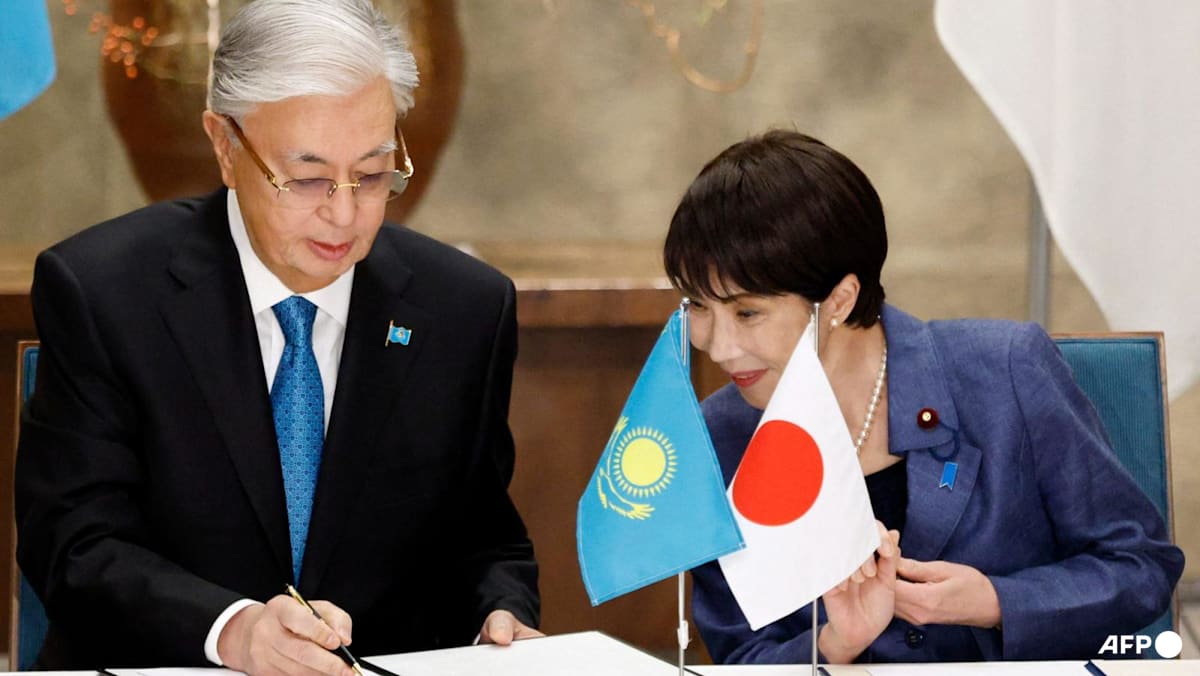
During the summit, Takaichi and the five leaders are expected to establish an “AI partnership” framework, aiming to use technology to explore mineral deposits in undeveloped mines, the Nikkei Asia business daily said.
Tokyo also plans to offer support to the development of the “Caspian Sea Route”, a logistics network connecting to Europe without passing through Russia, the Mainichi Shimbun daily and other media reported.
Tokyo has long encouraged Japanese businesses to invest in the region, but they have so far remained cautious.
In 2024, then-prime minister Fumio Kishida planned to visit Kazakhstan to hold a summit meeting with the five regional leaders, but he had to cancel the trip at the last minute to deal with a major earthquake disaster in southern Japan.
Meanwhile, Xi visited Astana in June, and China – which shares borders with Kazakhstan, Kyrgyzstan and Tajikistan – has presented itself as a main commercial partner, investing in huge infrastructure projects.
The ex-Soviet republics still see Moscow as a strategic partner but have been spooked by Russia’s invasion of Ukraine.
Among Japan’s focus areas will be resource development, decarbonisation assistance and infrastructure help, Uyama said.
Other than rare earths, Kazakhstan is the world’s largest uranium producer, Uzbekistan has giant gold reserves and Turkmenistan is rich in gas. Mountainous Kyrgyzstan and Tajikistan are also opening up new mineral deposits.
But exploiting these giant reserves remains complicated in the impoverished states with harsh and remote terrains.
https://www.channelnewsasia.com/east-asia/japan-central-asia-natural-resources-sanae-takaichi-5651846
