


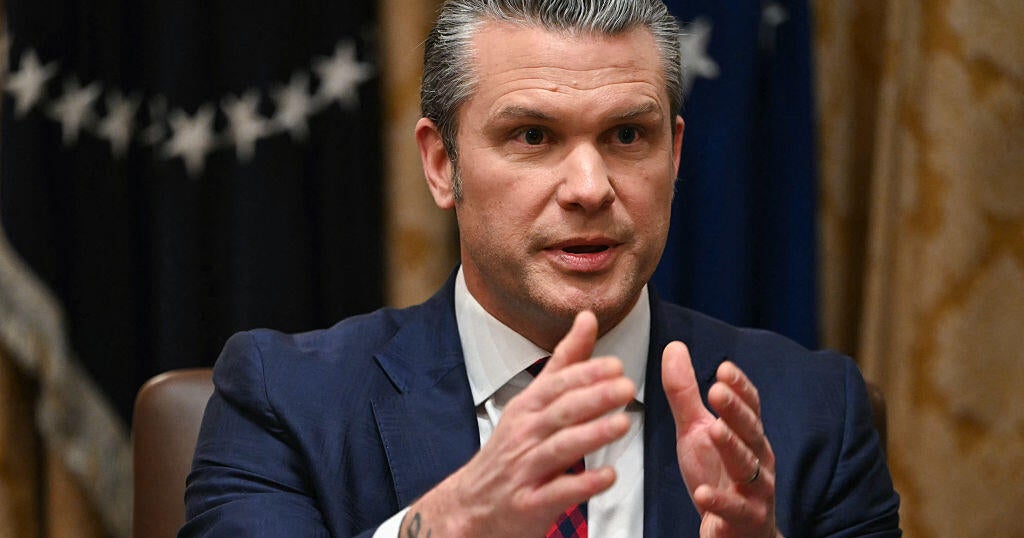
A report by the Pentagon’s internal watchdog into Defense Secretary Pete Hegseth’s use of Signal could be made public this week, a source familiar with the matter told CBS News, months after Hegseth and several other top Trump administration officials accidentally included a journalist in a group chat on the messaging app to discuss strikes in Yemen.
A copy of the Pentagon inspector general’s report has been sent to Congress, and a redacted and unclassified version is expected to be released to the public as early as Thursday, the source said.
Axios was first to report on the planned release.
The probe began eight months ago at the request of lawmakers. Acting Inspector General Steven Stebbins said in an April memo that his office was seeking to “determine the extent to which the Secretary of Defense and other DoD personnel complied with DoD policies and procedures for the use of a commercial messaging application for official business.”
Days earlier, The Atlantic’s editor in chief, Jeffrey Goldberg, revealed that he was added to an 18-person Signal chat that administration officials used to discuss the details of a sensitive operation to bomb the Houthis, a group that controls much of Yemen.
The texts published by Goldberg — sent in a chat called “Houthi PC small group” — appeared to include details from Hegseth’s account on the timing of strikes and the aircraft used, along with updates from then-National Security Advisor Michael Waltz’s account and messages from Vice President JD Vance.
The National Security Council later confirmed that the messages appeared to be authentic, though the White House asserted that the messages in the chat weren’t classified. President Trump stood by his staff at the time.
Waltz, who has since been shifted to serve as ambassador to the United Nations, later acknowledged that he created the chat group, calling the situation “embarrassing” but adding that he isn’t sure how Goldberg’s number was added.
The incident drew backlash from Democrats, who demanded to know how a reporter was inadvertently added to a seemingly highly sensitive discussion and whether security was compromised. Signal is popular because its end-to-end encryption technology makes it difficult for third parties to view messages, though human error poses a risk for any messaging platform, and experts have warned about phishing scams over Signal and other apps.
CBS News reported over the summer that the inspector general had obtained evidence that messages sent from Hegseth’s account included details from a classified email. Chief Pentagon spokesperson Sean Parnell said at the time that the department stood by its prior statements that “no classified information was shared via Signal.”
Other critics have questioned whether the Signal messages would be retained in accordance with records laws. Goldberg wrote that some messages were set to disappear after a week.
Stebbins, the Pentagon’s inspector general, said in April his team would review whether users followed “classification and records retention requirements.”
In April, sources told CBS News that Hegseth shared details about the Yemen strikes in a second private Signal group that included his wife, brother and personal attorney.
The report is expected to be made public at a delicate moment for Hegseth. Last week, The Washington Post reported that a Sept. 2 attack on an alleged drug boat in the Caribbean Sea included multiple strikes, with the military reportedly carrying out a follow-on strike to kill a pair of survivors because Hegseth allegedly said the operation should kill everybody. The Trump administration confirmed that there was a second strike but denied that it was ordered by Hegseth.
Democratic lawmakers have demanded more details and suggested an order to kill shipwrecked survivors could constitute a war crime. Hegseth has said the strikes were lawful and the follow-on strike was ordered by the officer in charge of the operation, Adm. Frank Bradley.
https://www.cbsnews.com/news/pentagon-report-signalgate-could-be-released-this-week/
